Dryer Not Heating Up? 5 Likely Causes and How to Fix Them
If your dryer not heating problem means the drum spins but the clothes come out damp, start with airflow and work toward the parts. The five causes below run from the cheapest to check to the hardest to fix: a clogged vent, a power fault, a blown thermal fuse, a failed heating element, and a bad thermostat or control. The first two suit anyone. The fuse and element tests suit a confident DIYer with a multimeter. The last cause usually belongs to a technician.
A dryer that runs but stays cold is frustrating because everything else looks fine. The motor, drum and buttons all work, so the fault hides in the heat circuit or the air path. The list covers electric and gas models, front-load and top-load, and brands such as Whirlpool, Samsung and Frigidaire, because the heating logic is much the same. Each item tells you what fails, how to test it, and when to stop and call someone.
Appliance Worx has repaired household appliances in Sacramento for more than 20 years under California license #47531, and dryer no-heat calls are part of that work. This guide follows the order that avoids wasted effort, so you can fix the easy causes yourself and know what a repair involves if you need one.
1. Clogged lint screen and exhaust vent
A blocked lint screen or vent is the most common reason a clothes dryer stops heating, and you should rule it out first. It is also the one cause that can be dangerous if you ignore it.
Why blocked airflow kills the heat
Hot, moist air has to leave the drum. When lint blocks the path, the dryer overheats and trips its safety devices , which cut the heater. Even before that happens, trapped moisture makes the dryer feel like it is not heating at all.
How to check it
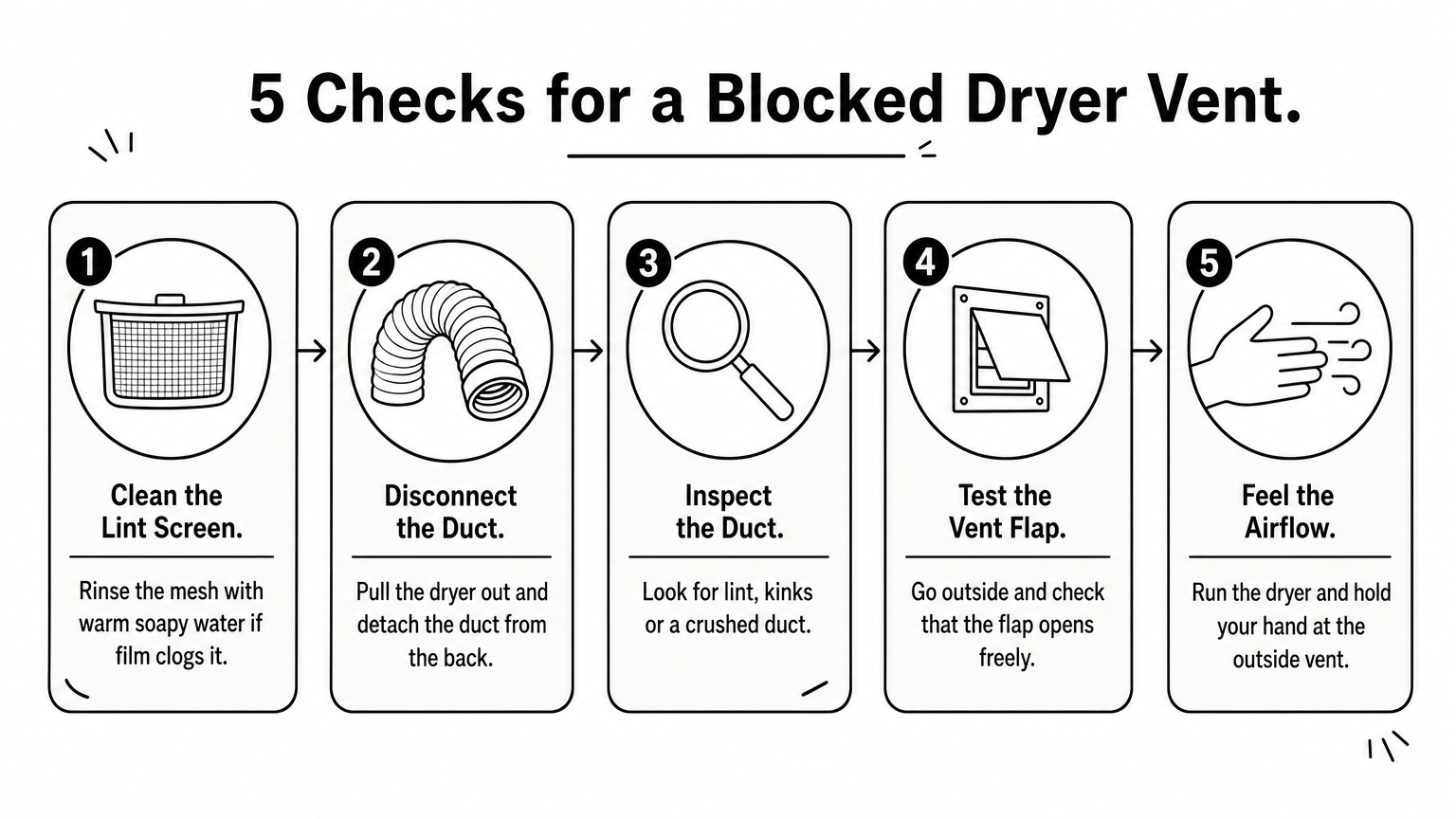
Unplug the dryer. If it is gas, close the shutoff valve before you move it. Then work through this list:
- Clean the lint screen, then rinse it with warm soapy water if dryer-sheet film has clogged the mesh.
- Pull the dryer out and disconnect the duct from the back.
- Look for lint, kinks or a crushed duct.
- Go outside and check that the vent flap opens freely.
- Run the dryer and hold your hand at the outside vent. You should feel strong airflow.
Fix it or call a pro
Clear the duct with a vent brush kit or a vacuum. Replace any crushed foil or vinyl duct with rigid or semi-rigid metal duct , which resists crushing. Long runs, many bends or a vent that exits through the roof are good reasons to hire a professional.
Fix a blocked vent before any part, because it causes the other failures on this list and can start a fire.
2. Tripped breaker or power problem
If the drum turns but there is no heat, a power fault is the second thing to check. Electric dryers need two separate 120-volt legs to make 240 volts for the heater. Lose one leg and the motor still runs, but the heater gets nothing.
Why half power gives you a cold dryer
The drum motor and controls run on 120 volts. The heating element needs the full 240. A double-pole breaker can trip only one side, and a loose cord connection can drop a leg too. Gas dryers heat with a burner and use only 120 volts for the electronics, so a lost leg is not their problem.
How to check it
Look at the breaker panel for a switch sitting between on and off. Push it fully off, then on again. Confirm the plug is seated and the cord is undamaged. Check the cycle settings too, since Air Fluff or a low-heat setting will never get hot. For a gas dryer, confirm the gas valve is open.
Fix it or call a pro
If the breaker trips again, stop resetting it. Burn marks on the plug, outlet or terminal block at the back of the dryer also mean you should call an electrician . A multimeter reading about 240 volts across the outlet's two hot slots confirms the supply is fine, and then the fault is inside the dryer.
If the breaker trips twice, stop resetting it and have the circuit inspected.
3. Blown thermal fuse
A blown thermal fuse is the classic answer when the dryer runs but will not heat. It is a small safety part that burns out once when temperatures climb too high and never resets.
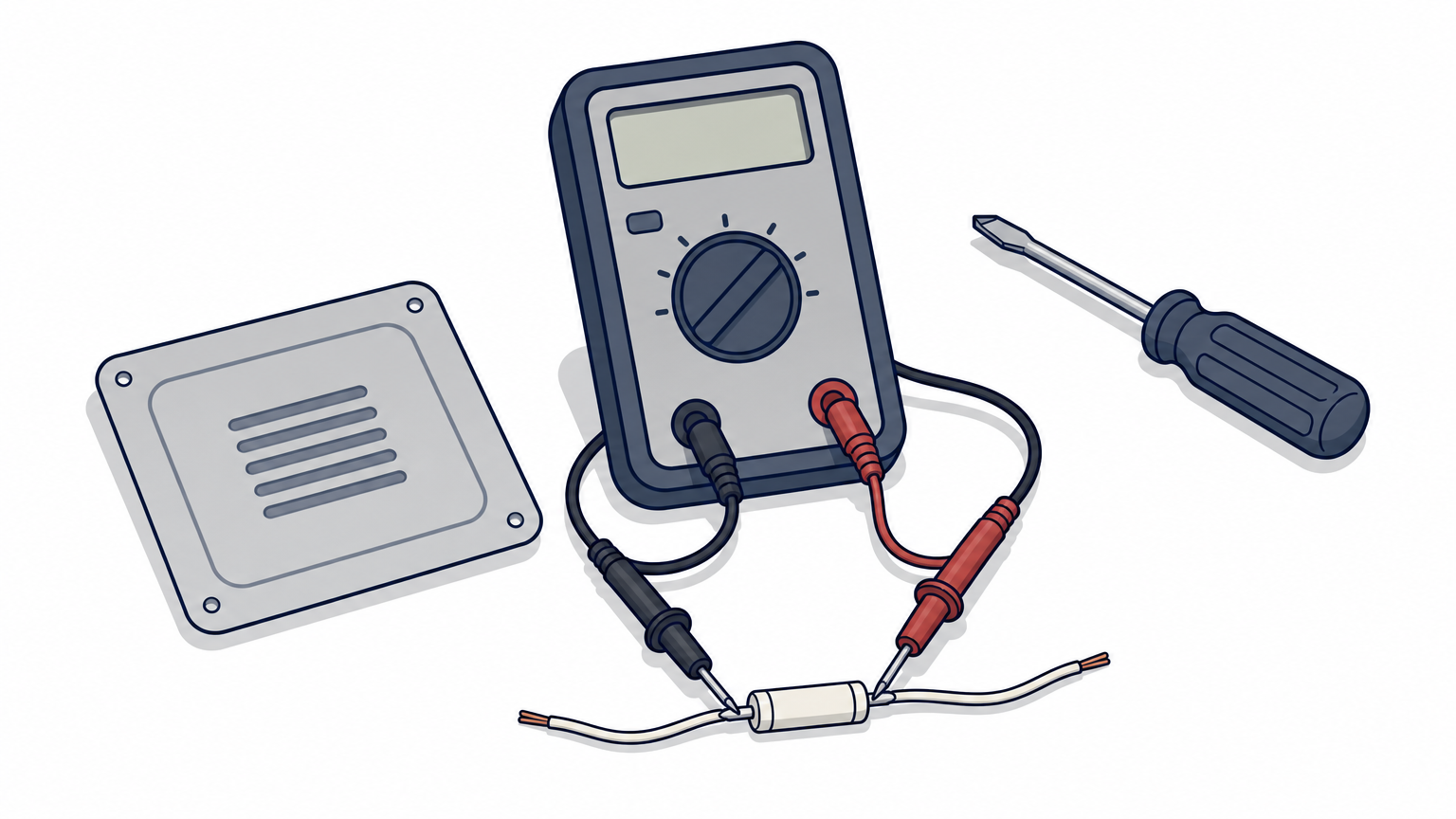
What the thermal fuse does
The fuse sits on the blower housing or exhaust duct and protects against overheating. When a clogged vent pushes the temperature up, the fuse opens and breaks the heat circuit . On some models it also kills the motor, so a dead drum can point here as well. Look up your model's wiring if you are unsure.
How to test it
You asked how to know if a thermal fuse is blown, and the answer is a continuity test. Unplug the dryer, remove the access panel, and pull the fuse's two wires. Touch the multimeter probes to its terminals. A good fuse reads near zero ohms or beeps . A blown one shows no continuity.
Replace it the right way
Buy the exact part for your model number, since fuses are rated for specific temperatures. The part is inexpensive and the swap is usually two screws and two wires. Replace it only after clearing the vent, or the new fuse will blow again within a few loads.
A thermal fuse never fails by itself. It blows because something made the dryer too hot.
4. Failed heating element
On an electric dryer, a broken heating element is the next suspect once the vent, power and fuse check out. It is a coiled wire that glows to heat the air, and it can snap or short over years of heat cycles.
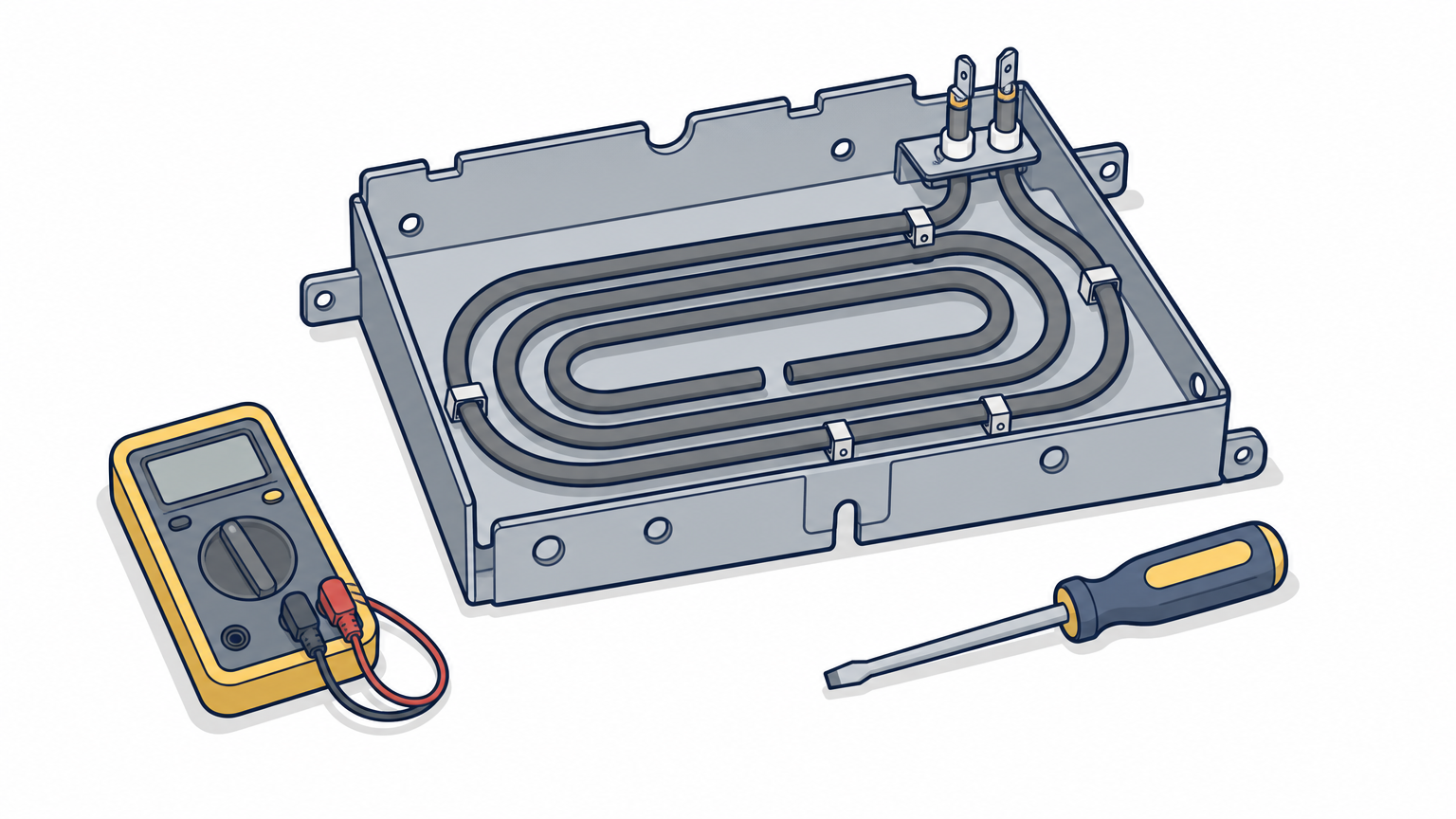
Why elements fail
The coil expands and contracts every cycle, and metal fatigue eventually breaks it. Lint buildup and overheating speed that up. A broken coil leaves the drum tumbling cold air.
How to test it
Unplug the dryer and remove the panel to reach the element housing. Look for a visible gap or sagging in the coil. Then test across the element's two terminals with a multimeter. A working element shows some resistance , and a reading of infinity means it is broken. Also test from each terminal to the metal housing. Any reading there means the coil is grounded and must be replaced.
Repair or replace the dryer
You can swap an element in under an hour with basic tools if you are comfortable with the wiring. Can you keep using the dryer in the meantime? It will run, but clothes will not dry, and you will waste power and wear fabric. A common rule of thumb says to replace the appliance when the repair costs more than half the price of a comparable new dryer . A newer dryer with a single bad element is usually worth fixing.
A cold dryer with a broken element is safe to leave alone, but running it only wastes electricity and time.
5. Faulty thermostat, sensor or control
If the vent, power, fuse and element all test fine, the problem is in the parts that decide when to heat. These are harder to diagnose and are the usual point to hand the job to a technician.
What can go wrong
Electric dryers use a cycling thermostat, a high-limit thermostat and a temperature sensor. A bad thermostat can stay open and cut the heat. On a gas dryer, a weak igniter or a failed gas valve coil does the same. A burned control board or relay can also stop power reaching the heater.
How to check it
You can test the thermostats for continuity the same way as the fuse. On a gas dryer, watch the igniter through the viewing port when you start a cycle. It should glow bright orange , then the flame should light. If it never glows, the igniter is weak. If it glows and no flame appears, suspect the gas valve coils. Dark scorch marks on a control board are a clear sign of failure.
When to call a technician
Boards, gas valves and igniters involve gas, high voltage and costly parts, so a wrong guess is expensive. Appliance Worx gives a written estimate before work begins , including parts, labor and tax, and backs every repair with a one-year parts and 90-day labor warranty. That makes the cost clear before you commit.
If four checks pass and the dryer is still cold, a technician's diagnosis costs less than guessing at parts.
Getting your dryer hot again
Work through the list in order. Clear the vent first, then check the breaker and settings, then test the thermal fuse, the heating element and finally the thermostats and controls. Most no-heat dryers turn out to have one of the first four problems, and each is a repair many people can do with a multimeter and a screwdriver.
If you get to the end of the list and the dryer is still cold, or you do not want to open the cabinet, Appliance Worx serves Sacramento, Fairfield, Vallejo, Vacaville and Stockton. Book a dryer repair with Appliance Worx online or by phone, and ask for same-day service when your schedule allows.
Our Recent Posts